
Exa
✓ Text source-checked Oct 28, 2026Search API for AI agents providing real-time web data, deep research, and structured content.
Source-checked against the vendor's site · rebuilt from the vendor's own pagesProfile updated Link checked Pricing captured How we rate
In short
Exa is a search API for AI agents offering real-time web data, deep research, and structured content extraction via neural and keyword search.
Exa provides web search and research infrastructure for AI applications. The platform combines an independent search index with content extraction and agentic research APIs to allow applications to find sources, retrieve contents, and produce grounded outputs.
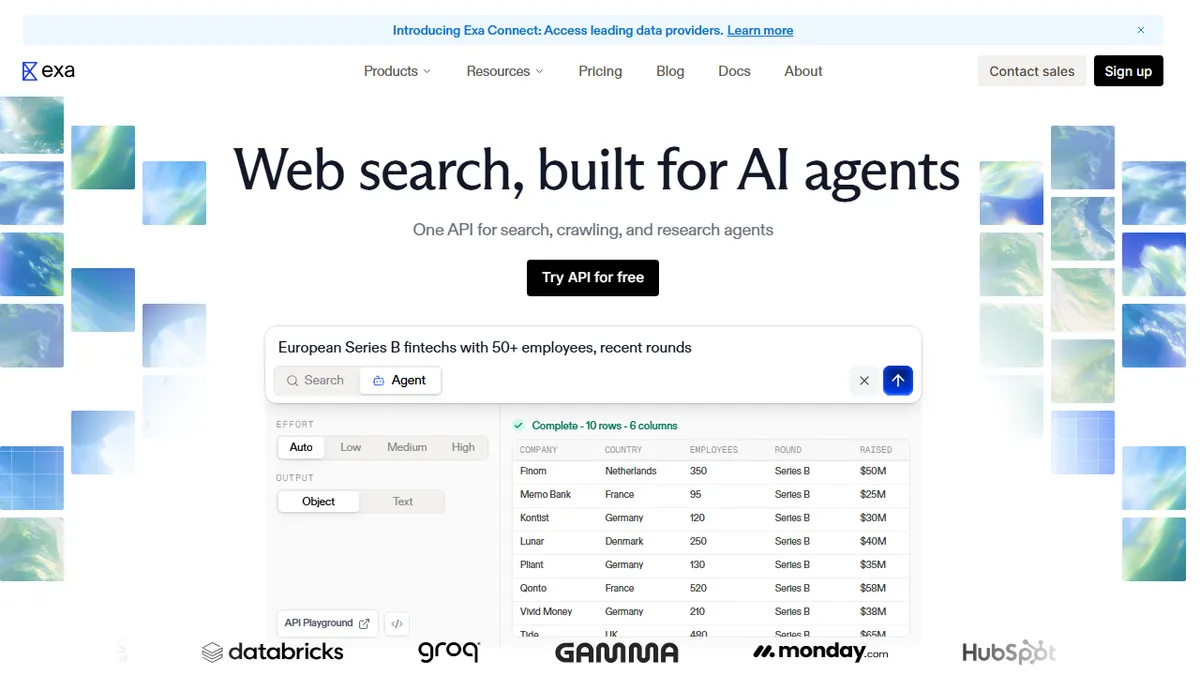
Search modes range from low-latency retrieval to multi-step research with structured output. The Highlights feature returns relevant passages copied from the page to keep context smaller than full text. The Exa Agent API supports natural-language queries, effort modes, and output schemas for structured outputs.
Exa Search is built for programmatic retrieval rather than ad-driven browsing. The service provides data categories for source-specific retrieval such as companies, people, news, and code.
The vendor says that Exa offers security and compliance controls for production and enterprise use cases, including Zero Data Retention and HIPAA compliance for eligible Enterprise customers. New accounts receive free credits, and paid usage is pay-as-you-go unless the organization has an enterprise contract.
According to Exa: Exa provides web search and research infrastructure for AI applications. Its pages list this strength: Built for programmatic retrieval rather than ad-driven browsing. They also state this limitation: The Lite search type does not support all parameters available in other search types.
— The AI Tool Bible editorial team
Pros
- ✅ Built for programmatic retrieval rather than ad-driven browsing.
- ✅ Highlights keep context smaller than full text for agents and RAG.
- ✅ Supports structured outputs via outputSchema in the Agent API.
- ✅ Provides data categories for source-specific retrieval such as companies, people, news, and code.
- ✅ The vendor says that Exa offers Zero Data Retention and HIPAA compliance for eligible Enterprise customers.
Cons
- ⚠️ The Lite search type does not support all parameters available in other search types.
Pricing (captured )
| Tier | Monthly | Key features |
|---|---|---|
| Starter | Free |
|
| Enterprise | Custom |
|
Prices change; we show the grid as captured on Nov 19, 2026. Check current pricing on the vendor's site →
Facts
- Platforms
- api (not source-checked)
- API available
- Yes (not source-checked)
- Free trial
- Yes (not source-checked)
- Model used
- Proprietary neural + keyword search (not source-checked)
- Docs pages indexed
- 7 pages we found in the docs (not source-checked)
- Hacker News
- 20 stories · top 46 points · last Oct 20, 2026 · checked Nov 11, 2026
- Earliest Wayback capture
- 2016-02-04 (earliest archived capture of the site, not a launch date)
Where this tool sits
Use cases
Frequently asked
- How much does Exa cost?
- Exa offers a freemium model. The Starter plan is free, including $10 in monthly credits and a $10 onboarding bonus. Paid usage is pay-as-you-go unless you have an enterprise contract.
- What search technologies does Exa use?
- Exa utilizes a proprietary combination of neural and keyword search. It features an independent search index, content extraction, and agentic research APIs for finding sources and retrieving contents.
- Can Exa handle enterprise security requirements?
- Yes, Exa provides security and compliance controls for production and enterprise use. This includes Zero Data Retention and HIPAA compliance for eligible Enterprise customers.
- What are the main use cases for Exa?
- Exa is designed for coding agents, chatbots, news monitoring, people search, company search, and deep research. It supports programmatic retrieval with data categories for specific sources like companies and code.
- How does Exa handle output structure?
- The Exa Agent API supports natural-language queries, effort modes, and output schemas for structured outputs. It also offers a Highlights feature to return relevant passages, keeping context smaller than full text.