Devin
✓ Editorially verifiedCognition Labs' "autonomous software engineer" agent.
In short
Devin is an autonomous agent that plans, codes, and opens PRs for well-scoped tickets. It suits teams needing headcount-equivalent throughput on contained tasks, not ambiguous work.
Pick Devin when you have well-scoped, contained tickets that an engineer would rather not work on.
Skip it for ambiguous, exploratory, or architecturally-novel work — humans (or Cursor) still win there.
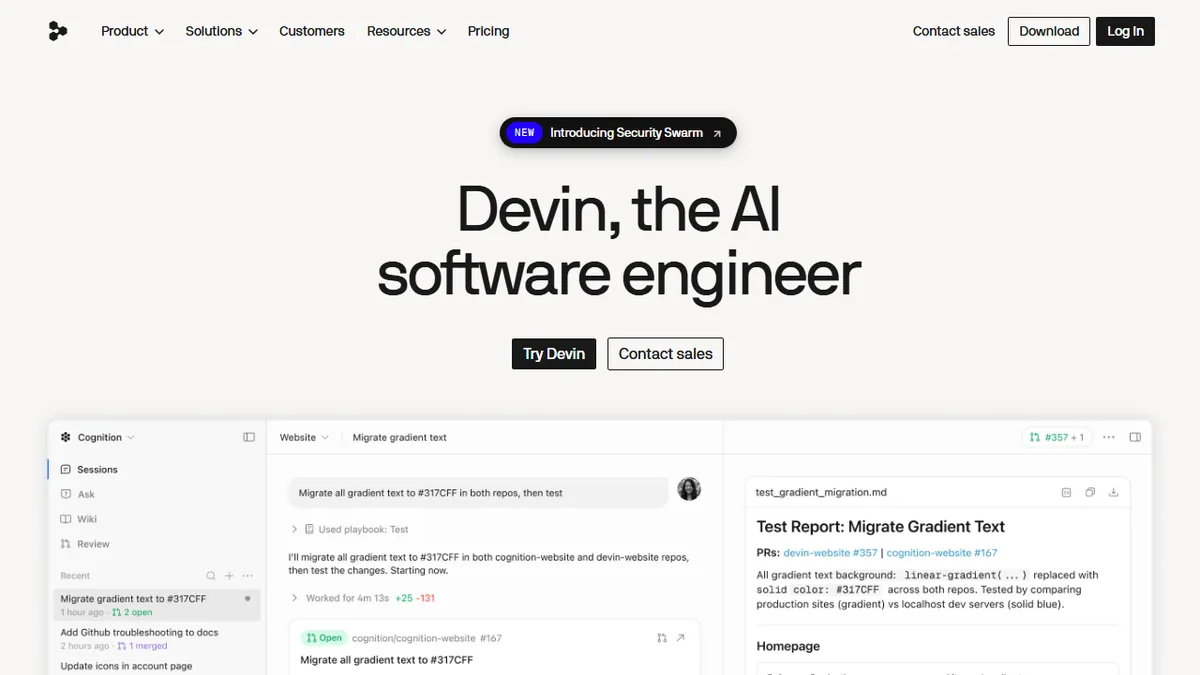
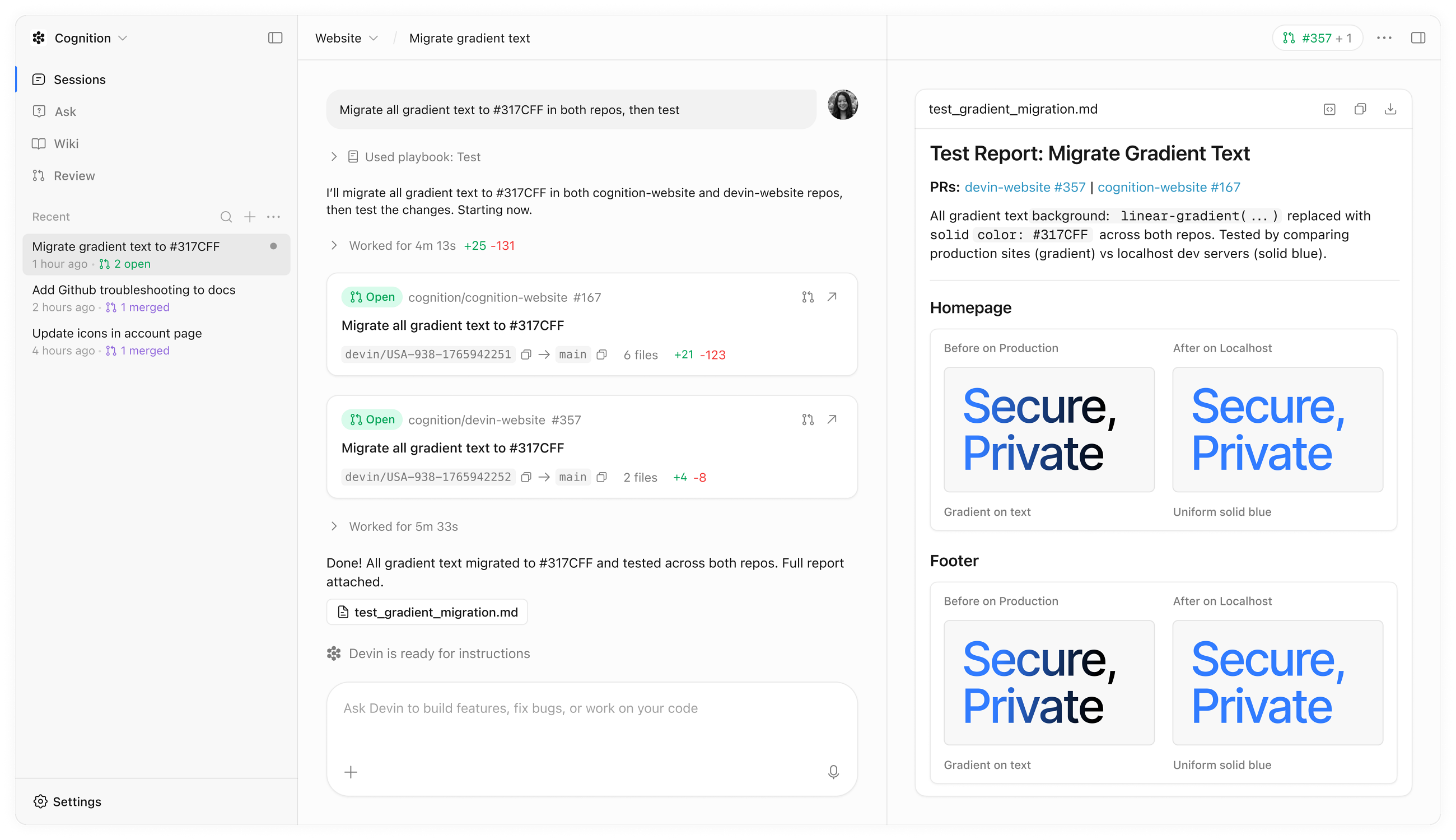
Devin is positioned as an autonomous software engineer — given a ticket, it plans, codes, runs tests, and opens PRs in its own browser + shell sandbox. The product runs end-to-end coding loops without intervention, which is genuinely useful for grunt-tier tickets and well-scoped tasks.
Where it shines: a clearly-defined ticket with tests, a contained codebase, and patience for a longer feedback loop than a local IDE provides. The visible reasoning and process replay are also genuinely useful for code review of the agent's work.
Where it slips: ambiguous tickets, complex existing state, and tasks where the human's mental model is faster than the agent's exploration. The $500/mo entry price reflects the positioning — this is an agent for teams that want headcount-equivalent throughput on specific kinds of work, not a coding assistant for individual developers.
Devin is the most ambitious AI coding product on the market and the most uneven. When it works it's genuinely magic; when it doesn't, you've spent $500/mo and an afternoon babysitting an agent. For the right team and the right tickets, it earns its keep.
— The AI Tool Bible editorial team
Pros
- ✅ Genuinely runs end-to-end coding loops
- ✅ Visible reasoning/process
- ✅ Useful for grunt tickets
- ✅ Replay for code review
Cons
- ⚠️ Expensive
- ⚠️ Quality drops on complex / ambiguous tasks
Use cases
Frequently asked
- How much does Devin cost?
- Devin is a paid service starting at $500 per month for the Core plan. This entry price reflects its positioning as an agent for teams seeking headcount-equivalent throughput on specific, well-scoped work rather than a basic coding assistant.
- What kind of tasks is Devin best for?
- Devin excels at well-scoped, contained tickets with clear definitions and tests. It is designed for grunt-tier tasks where an engineer might prefer not to work, providing end-to-end coding loops without intervention in a sandboxed environment.
- When should I skip using Devin?
- Skip Devin for ambiguous, exploratory, or architecturally-novel work. It also slips on tasks with complex existing state or where a human’s mental model is faster than the agent’s exploration. In these cases, humans or tools like Cursor are more effective.
- Which AI models does Devin use?
- Devin utilizes a multi-model approach, allowing for configurable use of models such as Claude or GPT. This flexibility supports its autonomous planning, coding, and testing processes within its own browser and shell sandbox.
- Is Devin suitable for individual developers?
- No, Devin is positioned for teams that want headcount-equivalent throughput on specific kinds of work. The $500/mo entry price and focus on autonomous, end-to-end ticket resolution make it less suitable as a general coding assistant for individual developers.
Explore related
Compare with similar tools
All in Agents →LangGraph
FeaturedStateful, graph-based agent orchestration from LangChain.
CrewAI
FeaturedPython framework for multi-agent orchestration.
Ernie Bot
Baidu's Mandarin-first ChatGPT rival, powered by the ERNIE model family
Moveworks
The enterprise AI assistant that searches, answers, and takes action across your business systems
AWS Bedrock
Build and scale generative AI applications with foundation models
Claude Agent SDK
Anthropic's official SDK for building autonomous Claude agents.