📖 The AI Tool Bible

Pathway vs Unstructured.io

A side-by-side look at pricing, capabilities, pros, cons, and our editorial scores.
 
Pathway
RAG
Unstructured.io
RAG
TaglineLive data framework for production RAG and streaming ETL pipelines in Python.Turn unstructured enterprise documents into LLM-ready data
CategoryRAGRAG
PricingFreemium· Community free (BSL 1.1, 8GB/4 cores); Scale and Enterprise tiers with license keyFreemium· Free: Free · Pay-As-You-Go: $0.03 / page · Business: Custom
ModelMulti-modelIn-house layout and table models plus optional OpenAI / Anthropic / Bedrock embeddings and enrichment
Editorial score7.3 / 10
Use cases
live-ragstreaming-etldocument-indexingmultimodal-raganomaly-detection
RAG document ingestionPDF and PPTX parsingTable extraction from reportsSharePoint to vector database pipelineOCR for scanned contractsChunking and embedding automationEnterprise knowledge base preprocessingMCP-driven agent document accessCompliance-grade document ETL
Pros
  • Genuinely live indexing - documents update without rebuild jobs
  • Self-hosted under BSL 1.1, no data leaves your infra
  • Rich connector library (Kafka, S3, SharePoint, Postgres, Delta Lake)
  • Same pipeline handles batch and streaming
  • 20+ production-ready templates including multimodal and adaptive RAG
  • Handles 64+ file formats through a single unified API, including notoriously ugly ones like scanned PDFs, PPTX and EML with attachments
  • Element-level output (Title, NarrativeText, Table, ListItem, Image) enables smarter, layout-aware chunking than naive text splitters
  • Open-source core library means you can run everything locally, air-gapped, with no vendor lock-in for basic partitioning
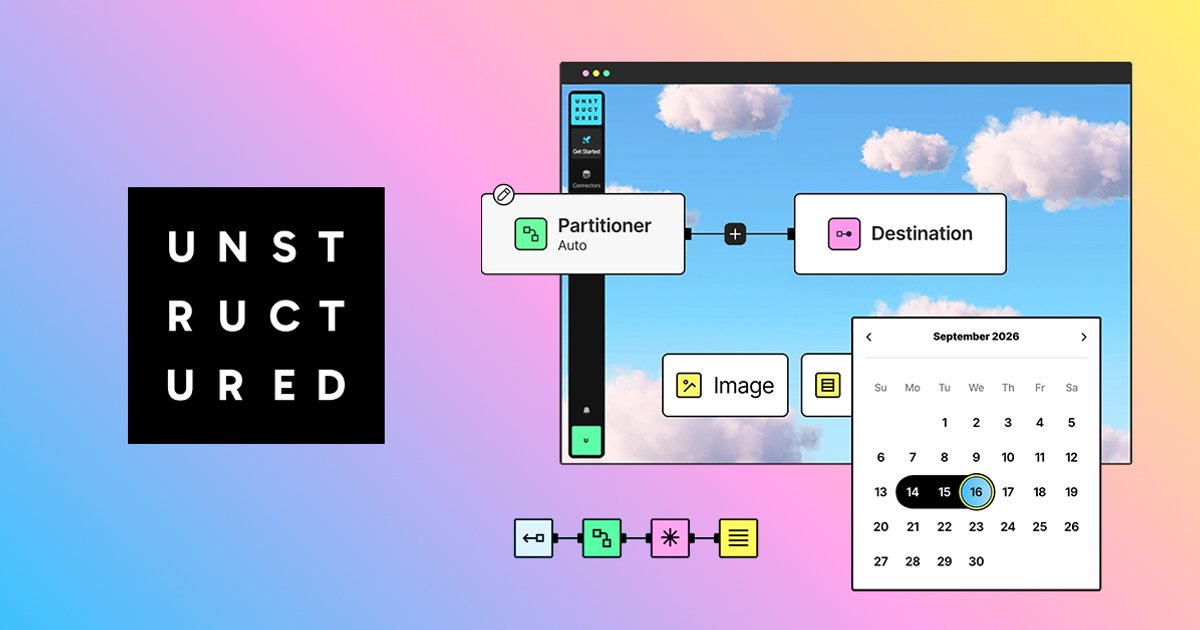
  • Serverless API and Workflow UI remove the operational burden of GPU-backed OCR and table models
  • Deep connector library (S3, Azure Blob, SharePoint, Google Drive, Snowflake, Databricks, plus Pinecone/Weaviate/Elastic/pgvector destinations) makes end-to-end pipelines declarative
  • Enterprise-grade compliance stack: SOC 2 Type II, HIPAA, GDPR and FedRAMP High, which is rare among ingestion tools
  • MCP server exposes ingestion to Claude, Cursor and other agent hosts as a first-class tool
Cons
  • Steeper learning curve than prompt-chain frameworks
  • BSL is not OSI-approved - commercial restrictions apply at scale
  • Smaller community than LangChain/LlamaIndex
  • Pricing for Scale/Enterprise tiers not transparent
  • Hosted API pricing is per-page and can get expensive at millions-of-pages scale versus rolling your own with the OSS library
  • The open-source library's accuracy on complex tables and scanned documents lags the paid 'hi_res' and VLM strategies noticeably
  • Cold-start latency and heavyweight model dependencies (Detectron2, Tesseract, ONNX) make local installs bulky
  • Chunking and enrichment options are opinionated — teams with unusual layouts often still need custom post-processing
  • Documentation covers many surfaces (OSS, API, Platform, MCP) and can be confusing when deciding which product to use
Websitepathway.comunstructured.io
Pick Pathway if
  • Genuinely live indexing - documents update without rebuild jobs
  • Self-hosted under BSL 1.1, no data leaves your infra
  • Rich connector library (Kafka, S3, SharePoint, Postgres, Delta Lake)
  • Same pipeline handles batch and streaming
Pick Unstructured.io if
  • Handles 64+ file formats through a single unified API, including notoriously ugly ones like scanned PDFs, PPTX and EML with attachments
  • Element-level output (Title, NarrativeText, Table, ListItem, Image) enables smarter, layout-aware chunking than naive text splitters
  • Open-source core library means you can run everything locally, air-gapped, with no vendor lock-in for basic partitioning
  • Serverless API and Workflow UI remove the operational burden of GPU-backed OCR and table models