LynxKite vs Model Context Protocol
A side-by-side look at pricing, capabilities, pros, cons, and our editorial scores.
 LynxKite Agents | 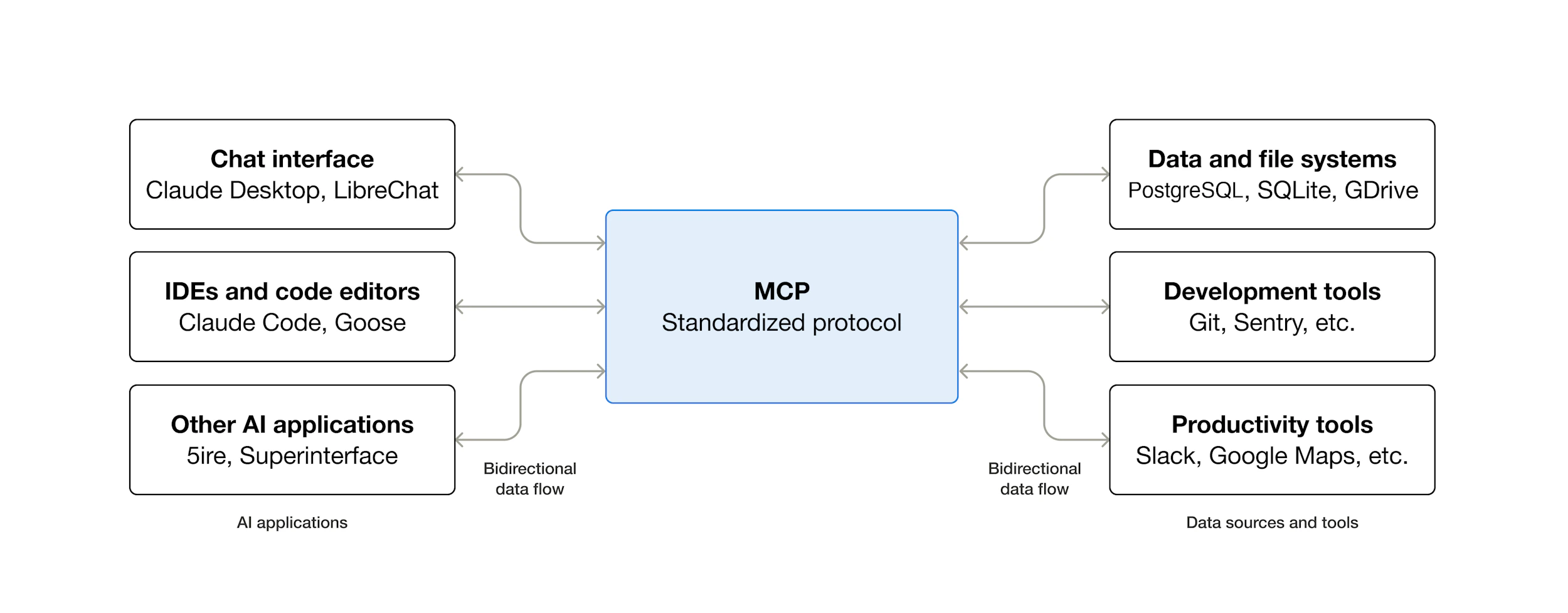 Model Context Protocol Agents | |
|---|---|---|
| Tagline | No-code AI orchestration platform built for graph-native pipelines in drug discovery and enterprise analytics. | Open standard that lets AI apps plug into data sources, tools, and workflows like USB-C for LLMs. |
| Category | Agents | Agents |
| Pricing | Enterprise· Contact sales; no public pricing | Free· Free and open source (MIT) |
| Model | Multi-model (LLM agents + GNNs + NVIDIA BioNeMo) | Model-agnostic |
| Editorial score | 6.9 / 10 | 7.4 / 10 |
| Use cases | drug-discoverygraph-neural-networksknowledge-graphsai-workflow-orchestrationenterprise-ml-pipelines | agent-toolingide-integrationsenterprise-chatbotsdata-source-connectorsworkflow-automation |
| Pros |
|
|
| Cons |
|
|
| Website | lynxkite.com | modelcontextprotocol.io |
Pick LynxKite if
- ✅ Graph-native: first-class GNNs and knowledge graphs, not bolted on
- ✅ GPU-accelerated via NVIDIA cuGraph and BioNeMo integrations
- ✅ No-code workflow builder usable by non-engineer domain experts
- ✅ Pre-built pharma pipelines shorten time to first model
Pick Model Context Protocol if
- ✅ Vendor-neutral standard backed by Anthropic, OpenAI, Microsoft, and major IDE vendors
- ✅ Huge and growing library of community-built servers for common tools and data sources
- ✅ Official SDKs in TypeScript, Python, Kotlin, Swift, C#, and Rust
- ✅ Works with both local stdio and remote HTTP/SSE transports