Flyte vs Sematic
A side-by-side look at pricing, capabilities, pros, cons, and our editorial scores.
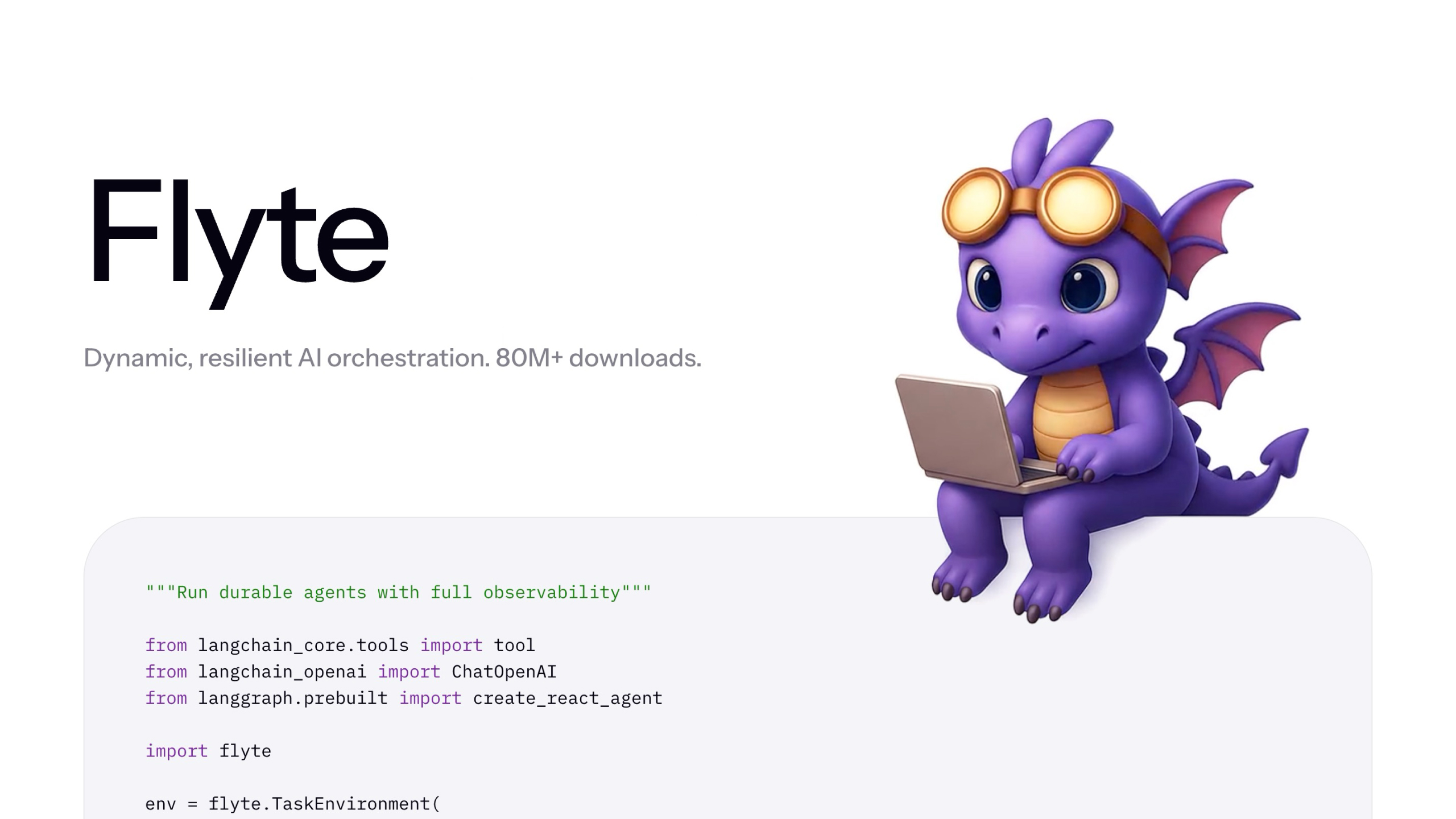
Tagline
Flyte
Flyte 2 is a durable AI runtime for running training, serving, and agent workloads with automatic recovery from failures.Sematic
Open-source Python-first orchestrator for ML training pipelines from laptop to cloud.Pricing
Flyte
FreemiumSematic
Freemium· Open-source free; managed/enterprise tier on requestFree trial
Flyte
YesSematic
YesAPI
Flyte
YesSematic
YesPlatforms
Flyte
api
Sematic
cliapi
Open source
Flyte
YesSematic
YesHacker News stories
Flyte
10
checked 2026-11-11
Sematic
2
checked 2026-11-20
Earliest Wayback capture
Flyte
2013-02-14
earliest archived capture of the site, not a launch date
Sematic
2022-08-10
earliest archived capture of the site, not a launch date
Model used
Flyte
Multi-modelSematic
—Best for
Flyte
—Sematic
Pick Sematic if you want a Python-native ML pipeline orchestrator that runs the same code on a laptop and a Kubernetes cluster with artifact tracking baked in.Not for
Flyte
—Sematic
Skip it if you need a general-purpose data orchestrator, a hosted SaaS with zero infra, or an LLM agent framework rather than ML training plumbing.Editorial score
Flyte
8.3 / 10Sematic
7.3 / 10Use cases
Flyte
AI trainingModel servingAgent orchestrationBatch inferenceFine-tuning
Sematic
ml-pipelinestraining-orchestrationexperiment-trackingkubernetes-mldag-workflows
Pros
Flyte
- Workflows are written in plain async functions without a proprietary DSL or YAML configuration.
- The system automatically recovers from infrastructure failures like OOM kills and disappearing GPUs by resubmitting with corrected resources.
- The platform retries and resumes from the failed task with the exact same inputs, avoiding the need to rerun the entire pipeline.
- The vendor says that infrastructure scales up and down to match workload demand, right-sizing every task to reduce idle GPU hours.
- Native integrations handle the serving plumbing for Streamlit, FastAPI, vLLM, SGLang, and Ollama applications.
Sematic
- Pure Python pipeline definitions, no YAML or custom DSL
- Same code runs locally and on Kubernetes with packaged envs
- Built-in artifact tracking, lineage, and a usable dashboard
- Apache-2.0 open source with active GitHub repo
- Supports nested, dynamic, and looping DAGs
Cons
Flyte
—Sematic
- Niche project compared to Prefect/Dagster/Flyte ecosystems
- Cloud execution requires a Kubernetes cluster you operate
- Not an LLM or generative AI tool, just orchestration
- Release cadence has slowed; check repo activity before adopting
Editorial score: rule-based, 0–10, from AI-assisted profile inputs (see /methodology) — not a user rating; “—” means unscored. “Not listed” means we have no record of it, not that it is absent. GitHub figures and prices carry the date they were checked or captured; prices are shown as published, unconverted.
Pick Flyte if
- ✅ Workflows are written in plain async functions without a proprietary DSL or YAML configuration.
- ✅ The system automatically recovers from infrastructure failures like OOM kills and disappearing GPUs by resubmitting with corrected resources.
- ✅ The platform retries and resumes from the failed task with the exact same inputs, avoiding the need to rerun the entire pipeline.
- ✅ The vendor says that infrastructure scales up and down to match workload demand, right-sizing every task to reduce idle GPU hours.
Pick Sematic if
- ✅ Pure Python pipeline definitions, no YAML or custom DSL
- ✅ Same code runs locally and on Kubernetes with packaged envs
- ✅ Built-in artifact tracking, lineage, and a usable dashboard
- ✅ Apache-2.0 open source with active GitHub repo