Portkey AI Gateway
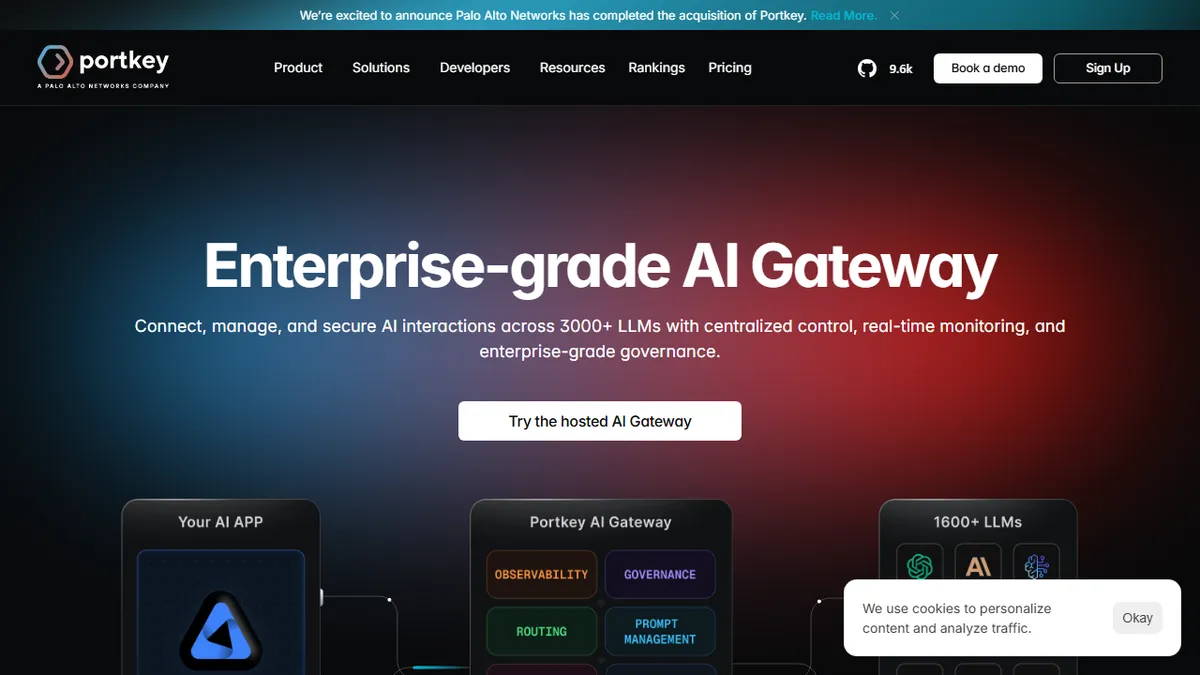
Open-source AI gateway that routes a single API call across 1,600+ LLMs with caching, fallbacks, and observability.
In short
Portkey is an open-source AI gateway routing one API call to 1,600+ LLMs. It adds caching, fallbacks, and observability for production teams.
Pick Portkey if you're shipping LLM features in production across multiple providers and need routing, caching, and cost visibility without writing it yourself.
Skip it if you call one model from one provider in a single app and don't care about fallbacks, caching, or per-team usage tracking.
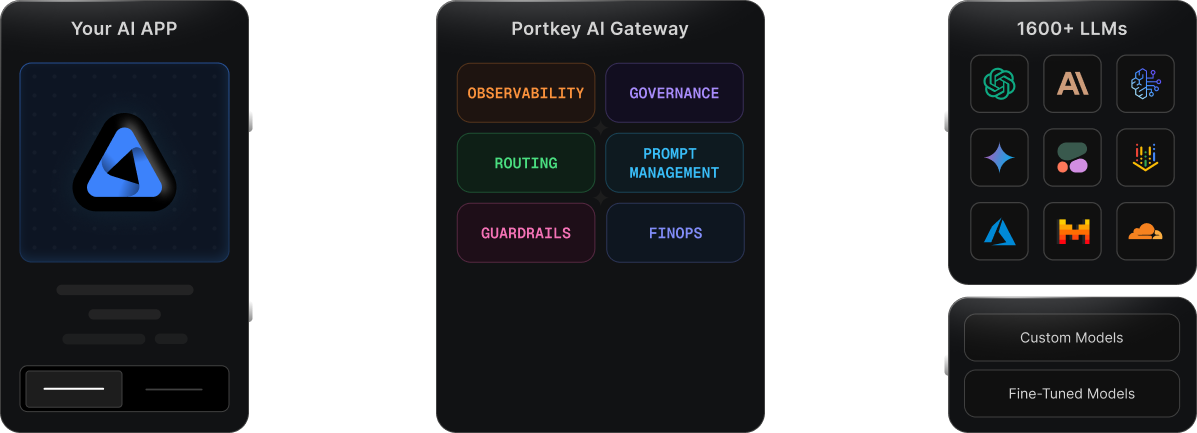
Portkey AI Gateway is a production-grade proxy layer that sits between your application and the LLM providers you actually use. With one unified API it gives you access to 1,600+ models across OpenAI, Anthropic, Google, Cohere, Mistral, Bedrock, Azure, open-source endpoints, and more, plus the routing primitives serious teams need: load balancing, automatic fallbacks, conditional routing, retries, timeouts, semantic and simple caching, and canary deployments for new models.
The gateway itself is open source (Apache-2.0, 10K+ GitHub stars) and can be self-hosted via Docker or `npx @portkey-ai/gateway`, but most teams run it through Portkey's managed cloud, which layers on a virtual-key vault, real-time observability, cost tracking, prompt management, and guardrails. It's aimed at engineering teams running multi-provider LLM workloads at scale, the kind of org that's tired of writing bespoke retry/fallback code for every SDK and wants budget controls and audit trails without building them in-house.
Pricing is freemium: a generous free tier covers solo developers and prototypes, paid plans add higher rate limits and team features, and enterprise tiers cover SSO, SOC 2, on-prem, and custom routing. It plays well with LangChain, LlamaIndex, Vercel AI SDK, and any OpenAI-compatible client by changing only the base URL.
Portkey is the most mature open-source AI gateway in the market right now, and the routing and observability story is genuinely useful once you have more than one provider in play. The self-host path is real, not theater, which makes it an easy recommendation even for teams that are skeptical of managed LLM middleware.
— The AI Tool Bible editorial team
Pros
- ✅ Single unified API for 1,600+ models across every major provider
- ✅ Open-source core (Apache-2.0) with optional managed cloud
- ✅ Built-in load balancing, fallbacks, retries, and semantic caching
- ✅ Real observability: latency, cost, and token usage per request
- ✅ OpenAI-compatible, drops in by changing the base URL
Cons
- ⚠️ Adds another network hop and a vendor dependency for managed users
- ⚠️ Advanced features (guardrails, prompt mgmt) require the paid platform
- ⚠️ Self-host setup still needs you to wire your own dashboards if you skip cloud
Use cases
Frequently asked
- How much does Portkey AI Gateway cost?
- Pricing is freemium. The Developer tier is free forever. Production costs $49/month. Enterprise pricing is custom and includes SSO, SOC 2, on-prem options, and custom routing.
- Can I self-host Portkey AI Gateway?
- Yes. The gateway is open source under Apache-2.0. You can self-host it via Docker or using `npx @portkey-ai/gateway`. Alternatively, you can use Portkey's managed cloud service.
- Which LLM providers does Portkey support?
- It supports over 1,600 models from providers including OpenAI, Anthropic, Google, Cohere, Mistral, Bedrock, Azure, and various open-source endpoints. It works with any OpenAI-compatible client.
- Does Portkey integrate with existing frameworks?
- Yes. It plays well with LangChain, LlamaIndex, and Vercel AI SDK. Integration is simple because you only need to change the base URL in your existing OpenAI-compatible client.
- What features does the managed cloud add?
- The managed cloud adds a virtual-key vault, real-time observability, cost tracking, prompt management, and guardrails. It also provides higher rate limits and team features compared to the free tier.
Explore related
Compare with similar tools
All in Agents →LangGraph
FeaturedStateful, graph-based agent orchestration from LangChain.
CrewAI
FeaturedPython framework for multi-agent orchestration.
Ernie Bot
Baidu's Mandarin-first ChatGPT rival, powered by the ERNIE model family
Moveworks
The enterprise AI assistant that searches, answers, and takes action across your business systems
AWS Bedrock
Build and scale generative AI applications with foundation models
Claude Agent SDK
Anthropic's official SDK for building autonomous Claude agents.