Bifrost
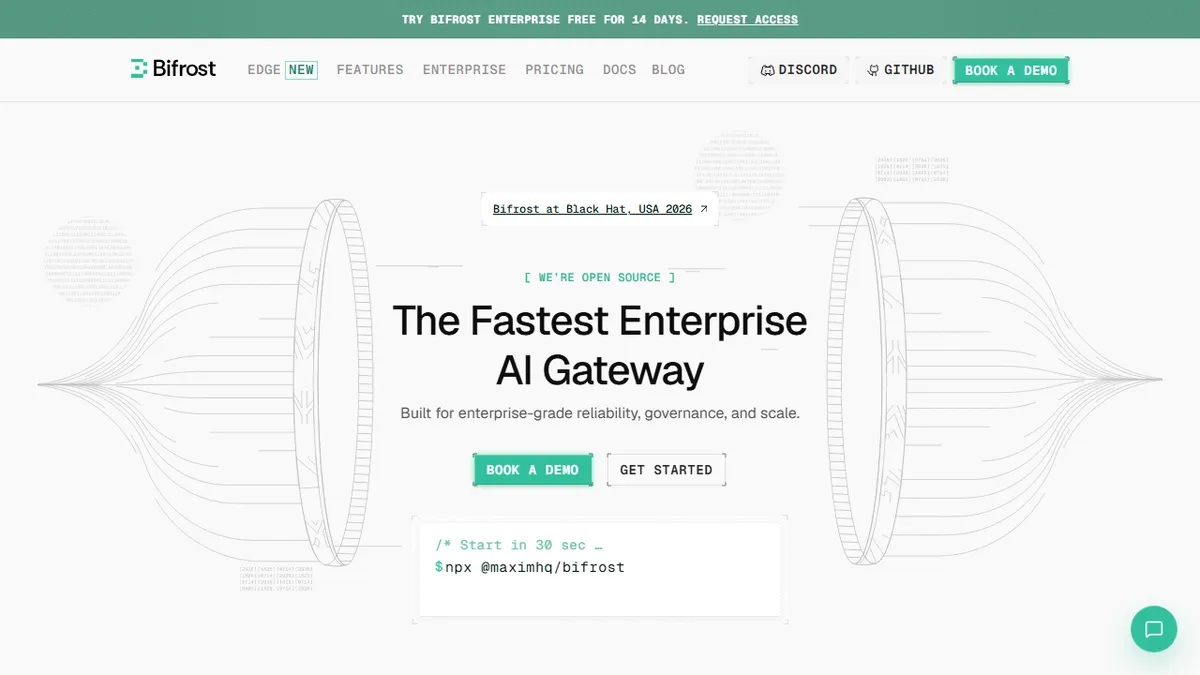
Open-source AI gateway that unifies 1000+ models behind one OpenAI-compatible endpoint with failover, budgets, and MCP routing.
In short
Bifrost acts as a single control plane for multi-provider LLM traffic, handling routing, budgets, and audit logs. It is best for platform teams in regulated sectors needing governance and observability at scale.
Pick Bifrost if you are running multi-provider LLM traffic at scale and need one gateway that does routing, budgets, MCP, and audit instead of stitching them yourself.
Skip it if you are a solo developer calling one model from one app — a direct SDK call or a lighter proxy will do.
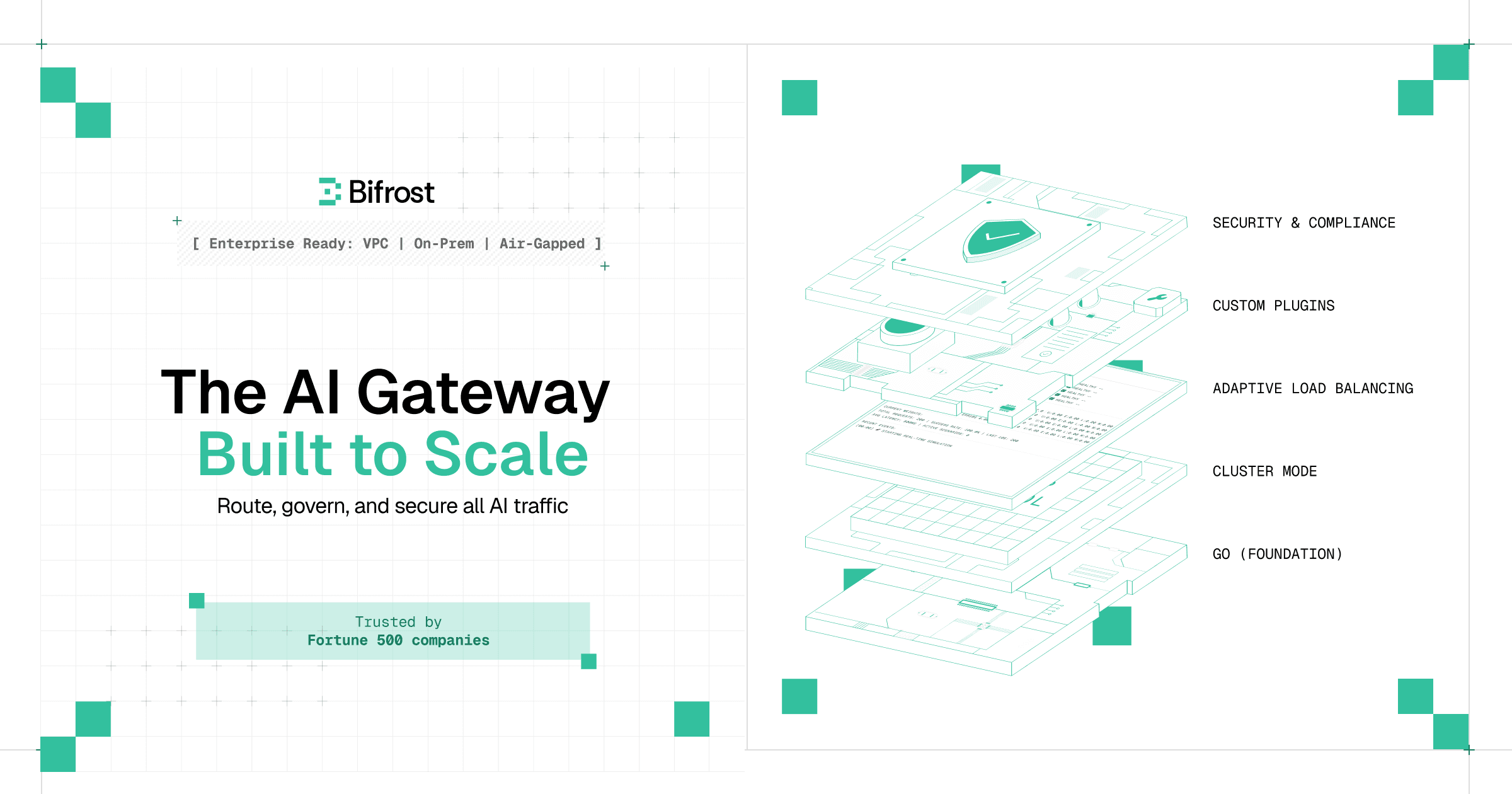
Bifrost is Maxim's enterprise AI gateway: a single control plane that fronts 8+ LLM providers and 1000+ models (OpenAI, Anthropic, Bedrock, Vertex, and friends) behind one OpenAI-compatible API. It handles automatic provider fallback, team-level budgets, SSO, audit logs, guardrails, and an MCP gateway for centralizing tool/agent connections. OpenTelemetry observability is built in, and the team publishes benchmarks claiming ~20 microseconds of added latency and ~5,000 req/s on a single node.
It is built for platform and infra teams at companies that have outgrown a hand-rolled LLM router — especially in regulated sectors like finance, healthcare, and insurance where governance, audit, and per-team spend caps matter. The code is Apache 2.0 on GitHub, so you can self-host the core gateway for free; Bifrost Enterprise adds the hosted control plane, SSO/RBAC, and support, with a 14-day free trial and pricing gated behind sales.
It is positioned as a faster, more opinionated alternative to LiteLLM and similar proxy layers, and it slots into existing stacks as a drop-in replacement for the OpenAI/Anthropic SDKs and LangChain. The main caveat is that the value really shows up at scale — if you only call one model from one app, this is more gateway than you need.
Bifrost is one of the more credible LiteLLM challengers we have seen, mostly because Maxim ships the core under Apache 2.0 and pairs it with an actual enterprise control plane rather than a thin hosted wrapper. The MCP gateway angle is the interesting bet — if MCP becomes the de facto tool protocol, having governance at that layer matters.
— The AI Tool Bible editorial team
Pros
- ✅ Apache 2.0 self-hostable core, not just a SaaS wrapper
- ✅ Drop-in OpenAI/Anthropic/LangChain SDK compatibility
- ✅ Built-in budgets, SSO, audit logs, and guardrails
- ✅ MCP gateway centralizes tool/agent connections
- ✅ Published benchmarks claim ~20 microsecond overhead vs LiteLLM
Cons
- ⚠️ Enterprise pricing is gated behind sales
- ⚠️ Overkill for single-provider, single-app setups
- ⚠️ Vendor benchmarks against LiteLLM should be verified in your stack
- ⚠️ Younger ecosystem than LiteLLM or Portkey
Use cases
Frequently asked
- What is the primary function of Bifrost?
- Bifrost is an enterprise AI gateway that fronts multiple LLM providers behind one OpenAI-compatible API. It manages automatic provider fallback, team-level budgets, and an MCP gateway for tool connections.
- Is Bifrost open source and can it be self-hosted?
- Yes, the core gateway code is available under the Apache 2.0 license on GitHub. This allows users to self-host the core gateway for free, while Enterprise features require a separate subscription.
- Who is Bifrost designed for?
- It is built for platform and infrastructure teams at companies that have outgrown hand-rolled LLM routers. It is particularly suited for regulated sectors like finance and healthcare where governance and audit logs are critical.
- How does Bifrost integrate with existing development stacks?
- Bifrost slots into existing stacks as a drop-in replacement for OpenAI and Anthropic SDKs, as well as LangChain. It provides OpenTelemetry observability and supports MCP routing for centralized agent connections.
- When should a developer avoid using Bifrost?
- Solo developers calling a single model from one application should skip Bifrost, as it is considered overkill for such setups. A direct SDK call or a lighter proxy is more appropriate for single-provider, single-app use cases.
Explore related
Compare with similar tools
All in Agents →LangGraph
FeaturedStateful, graph-based agent orchestration from LangChain.
CrewAI
FeaturedPython framework for multi-agent orchestration.
Ernie Bot
Baidu's Mandarin-first ChatGPT rival, powered by the ERNIE model family
Moveworks
The enterprise AI assistant that searches, answers, and takes action across your business systems
AWS Bedrock
Build and scale generative AI applications with foundation models
Claude Agent SDK
Anthropic's official SDK for building autonomous Claude agents.