CrewAI vs Model Context Protocol
A side-by-side look at pricing, capabilities, pros, cons, and our editorial scores.
CrewAI Agents | 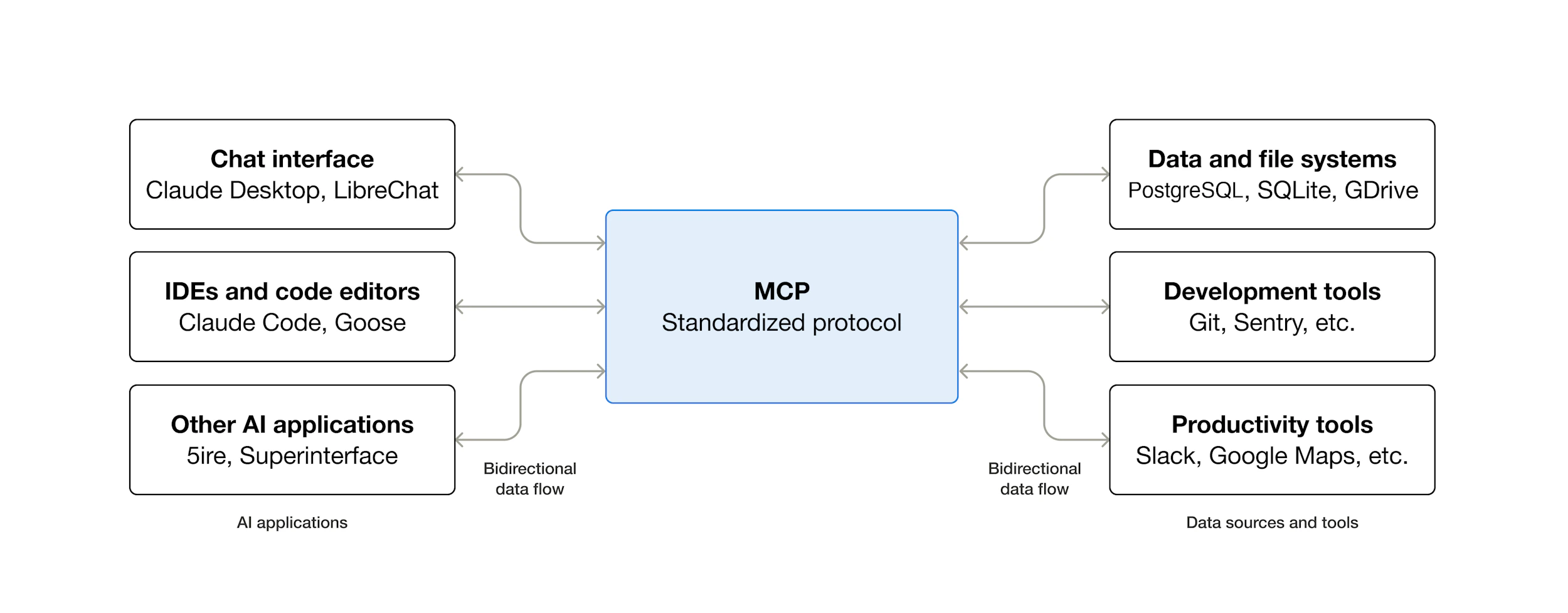 Model Context Protocol Agents | |
|---|---|---|
| Tagline | Python framework for multi-agent orchestration. | Open standard that lets AI apps plug into data sources, tools, and workflows like USB-C for LLMs. |
| Category | Agents | Agents |
| Pricing | Freemium· Basic: Free · Enterprise: Custom | Free· Free and open source (MIT) |
| Model | BYO (Claude / GPT / open) | Model-agnostic |
| Editorial score | 8.4 / 10 | 7.4 / 10 |
| Use cases | multi-agentorchestrationPython | agent-toolingide-integrationsenterprise-chatbotsdata-source-connectorsworkflow-automation |
| Pros |
|
|
| Cons |
|
|
| Website | www.crewai.com | modelcontextprotocol.io |
Pick CrewAI if
- ✅ Clean Python API
- ✅ Strong role/goal abstractions
- ✅ Active community
- ✅ Hosted platform for deployment
Pick Model Context Protocol if
- ✅ Vendor-neutral standard backed by Anthropic, OpenAI, Microsoft, and major IDE vendors
- ✅ Huge and growing library of community-built servers for common tools and data sources
- ✅ Official SDKs in TypeScript, Python, Kotlin, Swift, C#, and Rust
- ✅ Works with both local stdio and remote HTTP/SSE transports