AIVA vs Kyutai Moshi
A side-by-side look at pricing, capabilities, pros, cons, and our editorial scores.
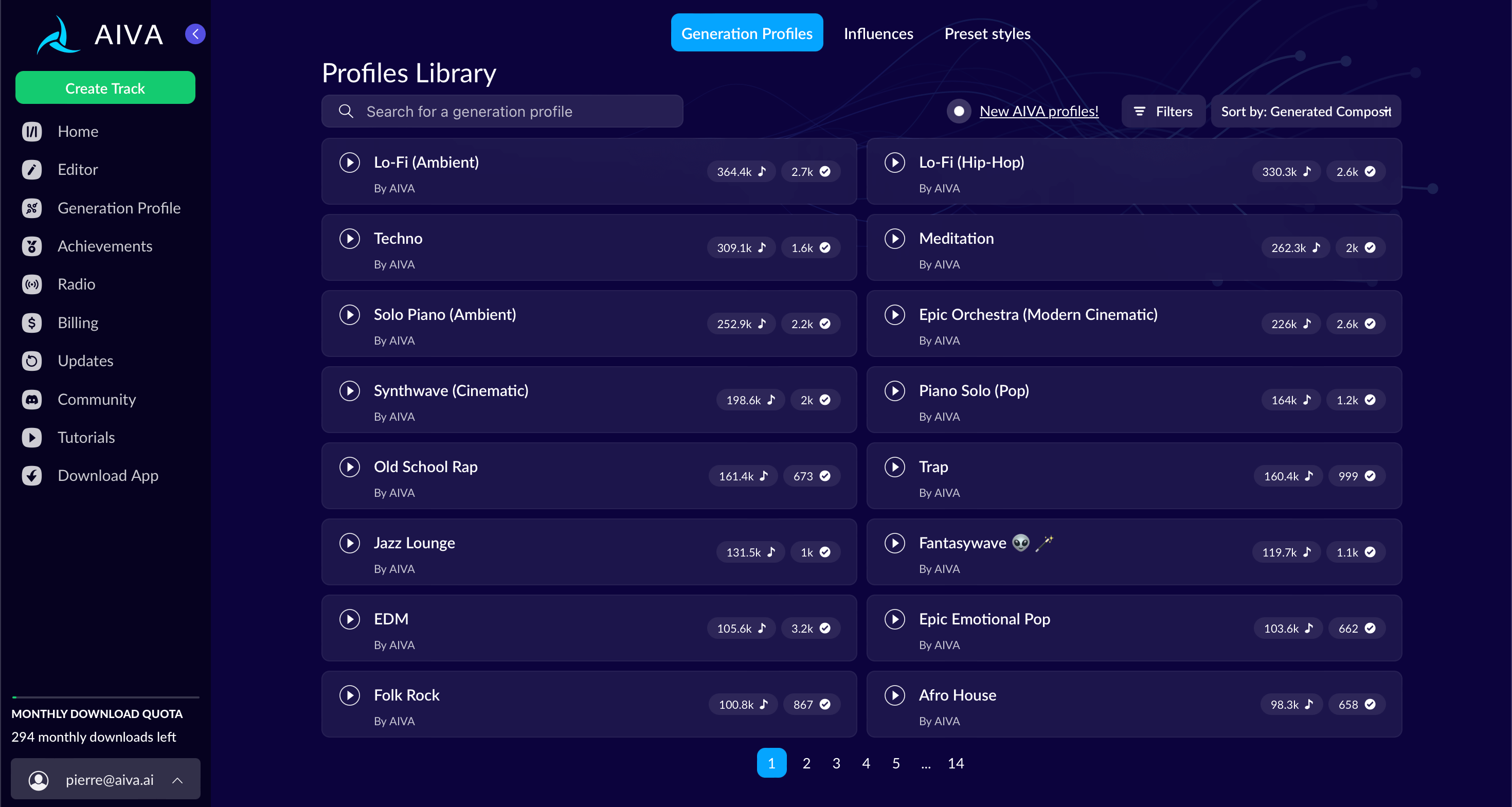 AIVA Audio | Kyutai Moshi Audio | |
|---|---|---|
| Tagline | AI music composition tool that generates royalty-friendly tracks in 250+ styles with editable MIDI output. | Open-source, full-duplex speech-to-speech foundation model with sub-200ms latency |
| Category | Audio | Audio |
| Pricing | Freemium· Free; Standard ~€11/mo, Pro ~€33/mo (billed yearly) | Free· Free and open source. Models under CC-BY 4.0, code under MIT (Python) / Apache 2.0 (Rust). Self-hosted only — you pay your own compute (24GB+ GPU for PyTorch, or Apple Silicon via MLX). |
| Model | Proprietary (AIVA) | Moshi (7B-class speech-text foundation model) + Mimi neural audio codec, in-house by Kyutai |
| Editorial score | 8.1 / 10 | — |
| Use cases | music-generationsoundtrack-compositionmidi-exportroyalty-free-musiccontent-creator-audio | Real-time voice assistant prototypesResearch on full-duplex spoken dialogueOn-device voice interaction on Apple Silicon via MLXLow-latency conversational agents behind WebSocketNeural audio codec experimentation with MimiSelf-hosted voice interface for privacy-sensitive appsSpeech tokenizer for downstream audio LLM trainingInterruptible in-car or wearable voice UX |
| Pros |
|
|
| Cons |
|
|
| Website | aiva.ai | kyutai.org |
Pick AIVA if
- ✅ Editable MIDI output, not just a baked audio file
- ✅ 250+ style presets plus custom style training
- ✅ Clear copyright ownership on Pro tier
- ✅ Long pedigree (since 2016, SACEM-recognised)
Pick Kyutai Moshi if
- ✅ Truly full-duplex — handles interruptions, overlap and back-channels rather than rigid turn-taking
- ✅ Sub-200ms practical latency on a single L4 GPU, well below third-party voice APIs
- ✅ Fully open weights (CC-BY 4.0) plus MIT/Apache code — self-host with no per-minute billing
- ✅ Ships with Mimi, a streaming neural audio codec that beats SpeechTokenizer and SemantiCodec